The Saint-Gatien Cathedral in Tours, dedicated to the city’s first bishop, was built between 1170 and 1547 on the site of an earlier 4th-century church. Standing near the old Loire bridge once guarded by the Château de Tours, it serves as the seat of the Archdiocese of Tours and has been listed as a French historical monument since 1862.
The twin towers of Saint-Gatien Cathedral were built in the early 16th century. The north tower was built by Pierre de Valence and the south tower by Pierre Gadier. Rising to 68 and 69 meters, they combine Romanesque bases with Gothic ornamentation, crowned by early Renaissance details.
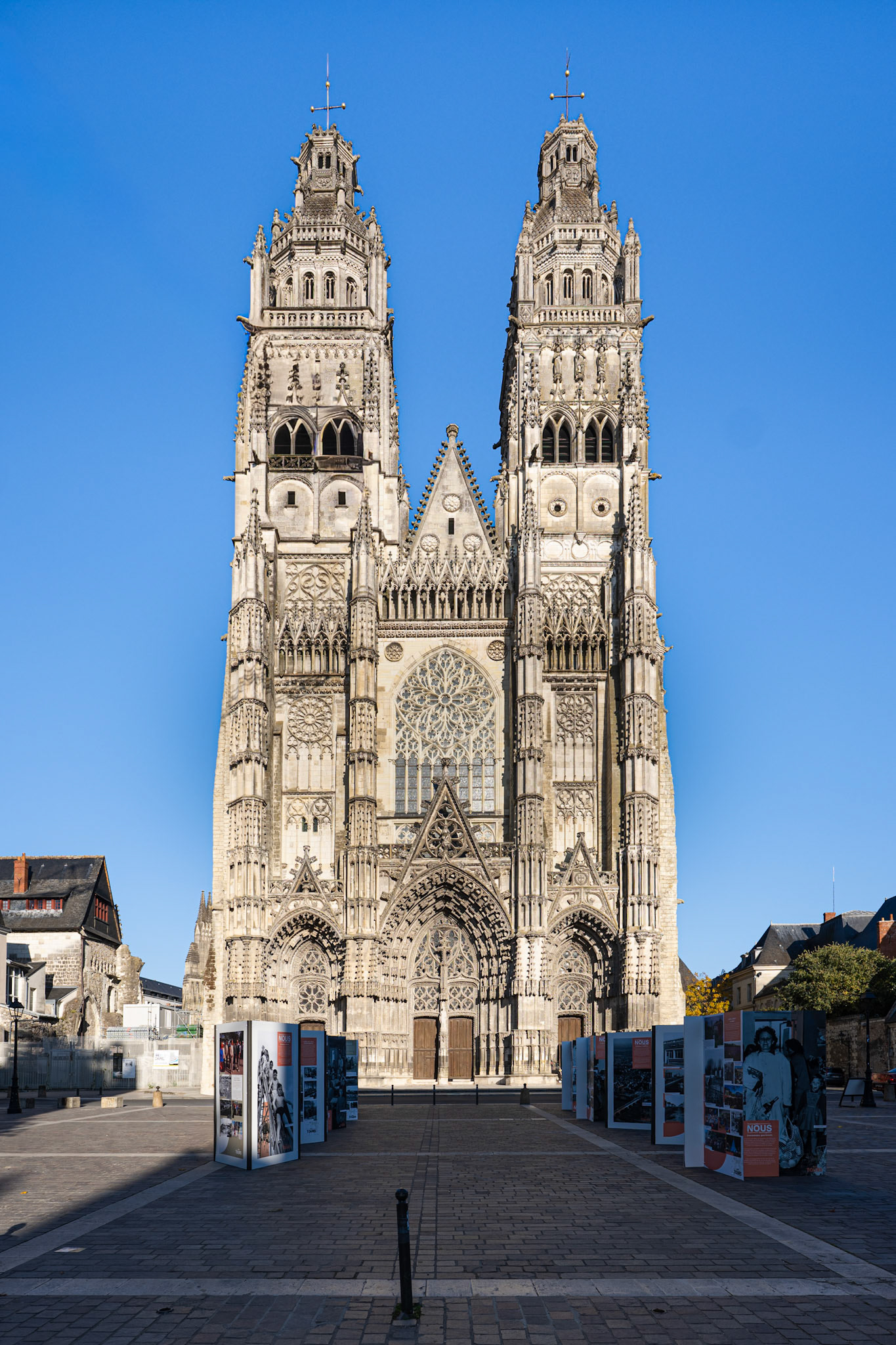
Cathédrale Saint-Gatien de Tours - facade and towers
Nave
The nave rises to nearly 29 meters and follows the classic three-tier Gothic elevation: large arcades at ground level, a narrow triforium above, and tall clerestory windows. Its relatively modest width of 28 meters likely reflects constraints imposed by the earlier Romanesque structure on which it was rebuilt. The vaulting rests retains its historic timber framework: 13th-century beams above the choir and 15th-century carpentry over the nave. In total, the building stretches 97 meters in length, with a transept spanning 46 meters.
Consecrated in 2018, the cathedral’s altar is carved from a single block of Burgundian marble limestone. Designed by sculptor Alicia Drouillet, it is decorated with a series of engraved eight-petal Gothic roses.
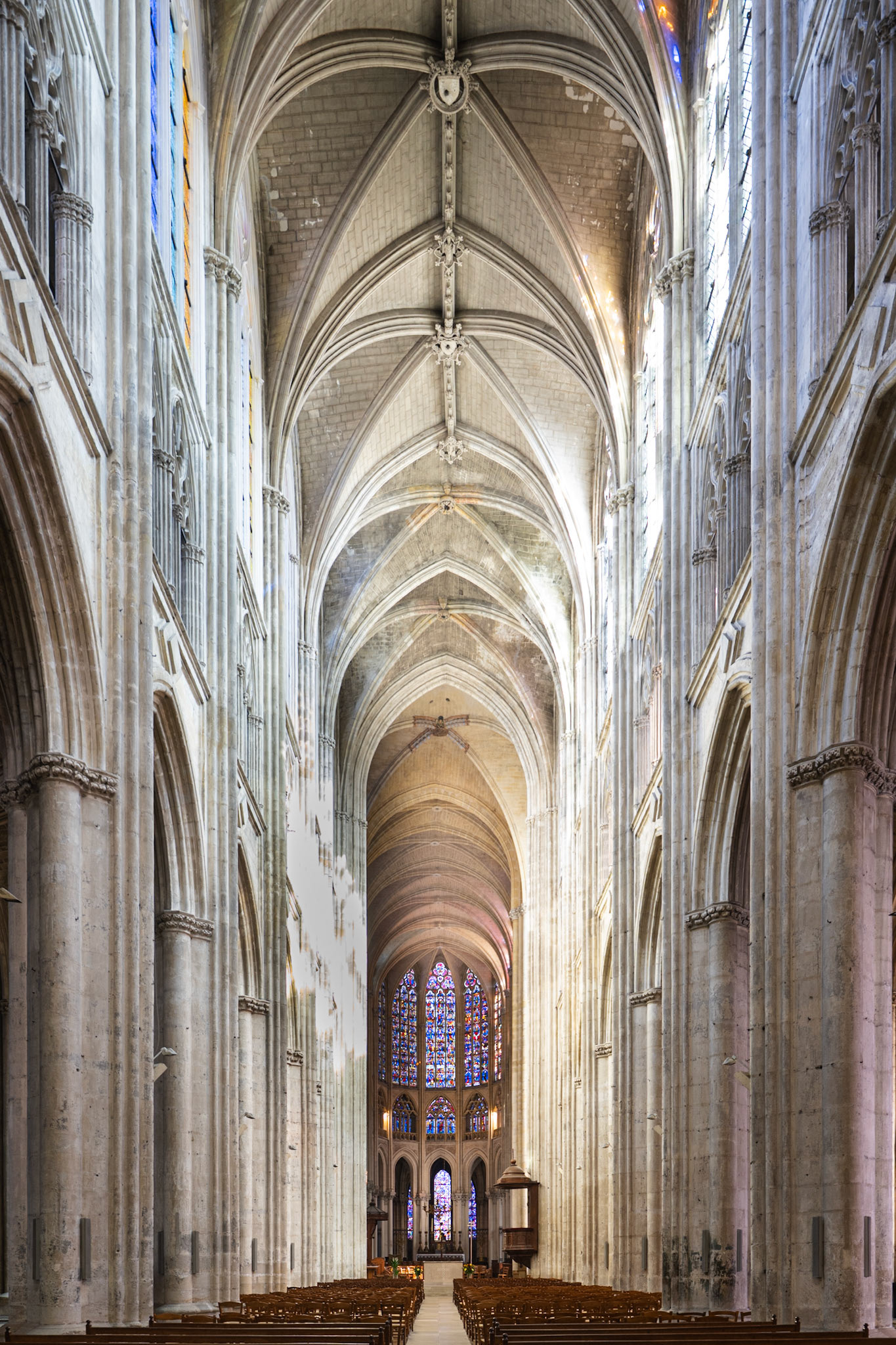
nave
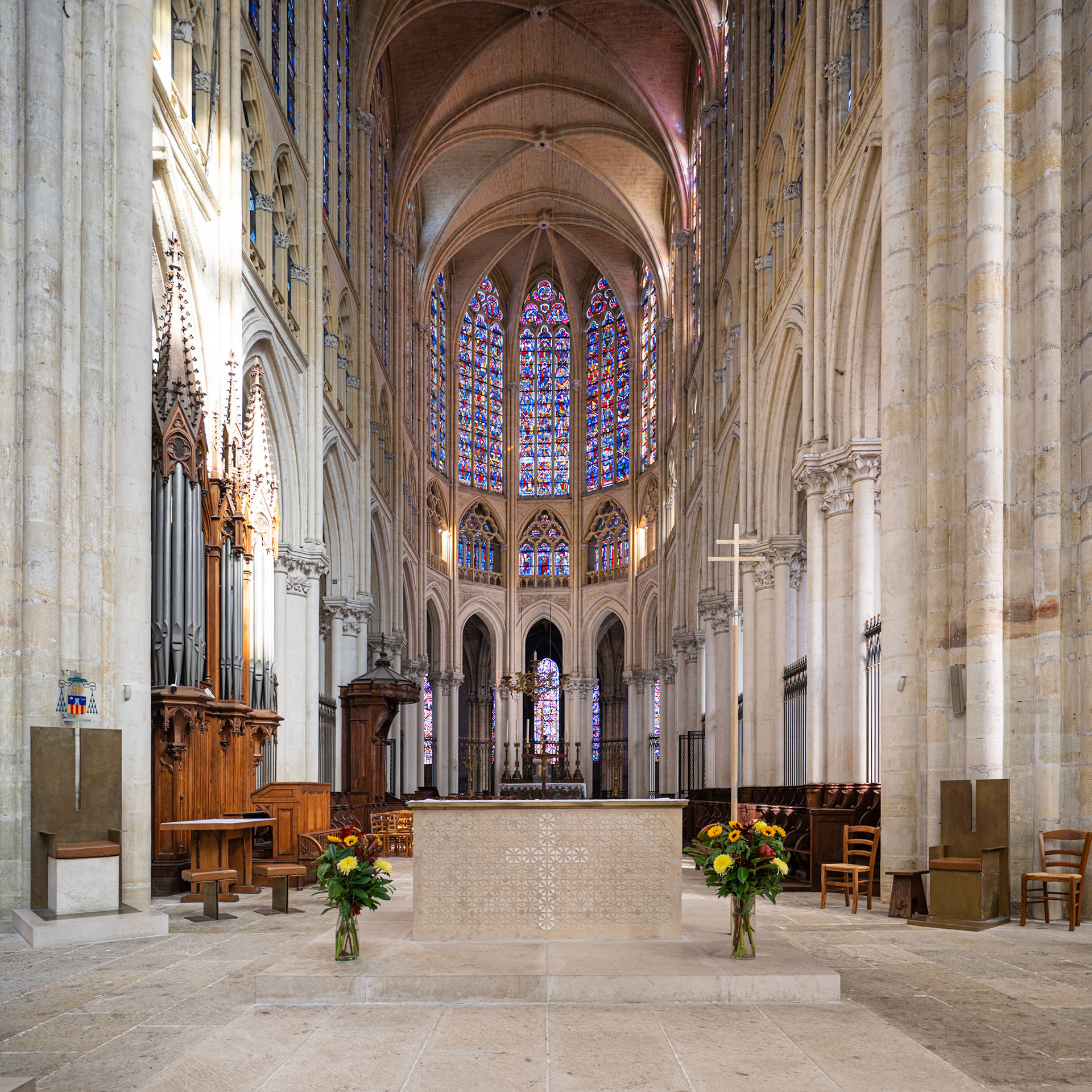
altar by Alicia Drouillet (2018)
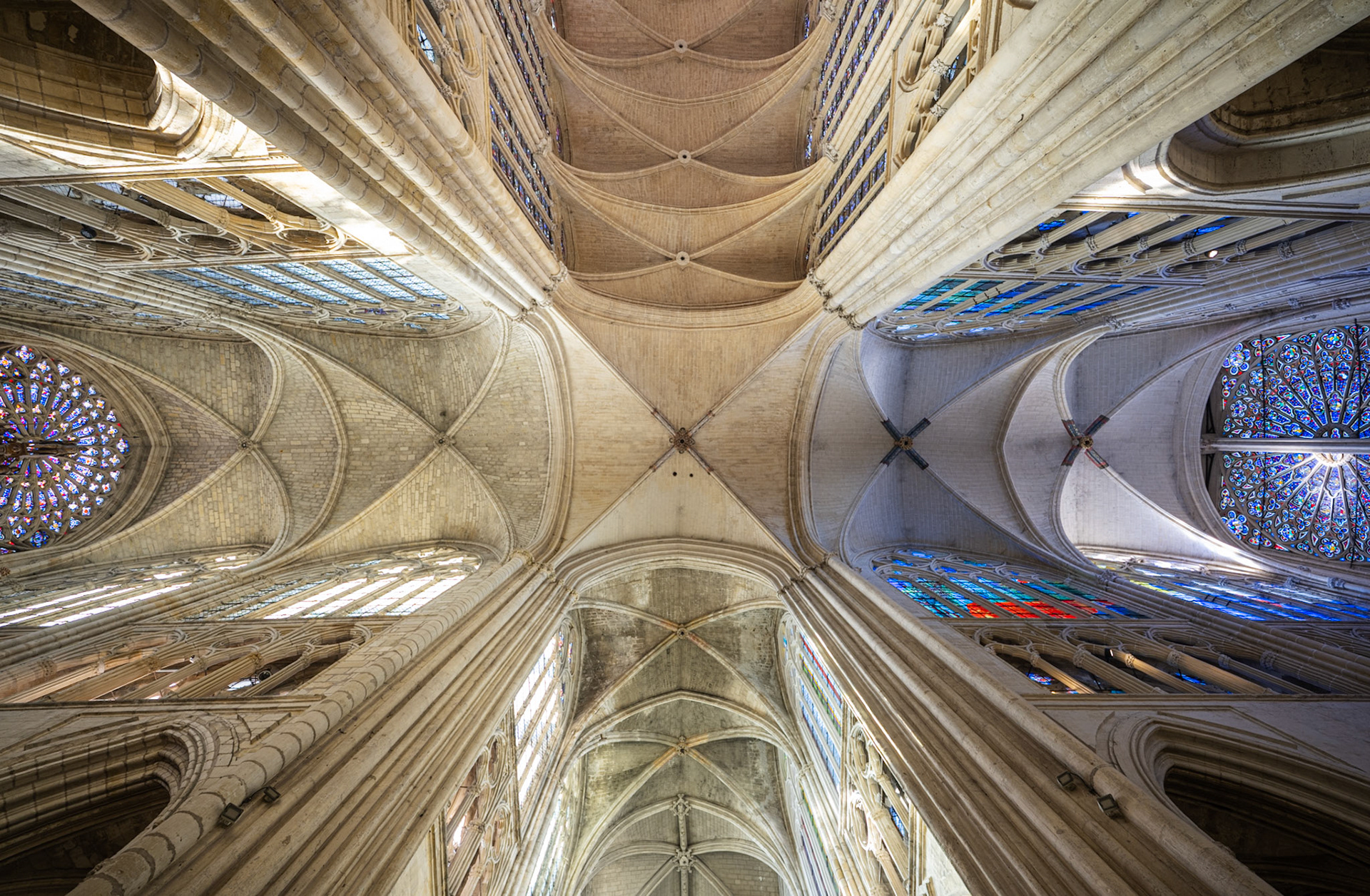
transept and rose windows
Stained glass windows
The cathedral is notable for its remarkable collection of 13th-century stained glass windows . The finest examples are found in the ambulatory chapels and the upper windows of the choir, forming one of the most complete and best-preserved ensembles of medieval medallion glass in Europe.
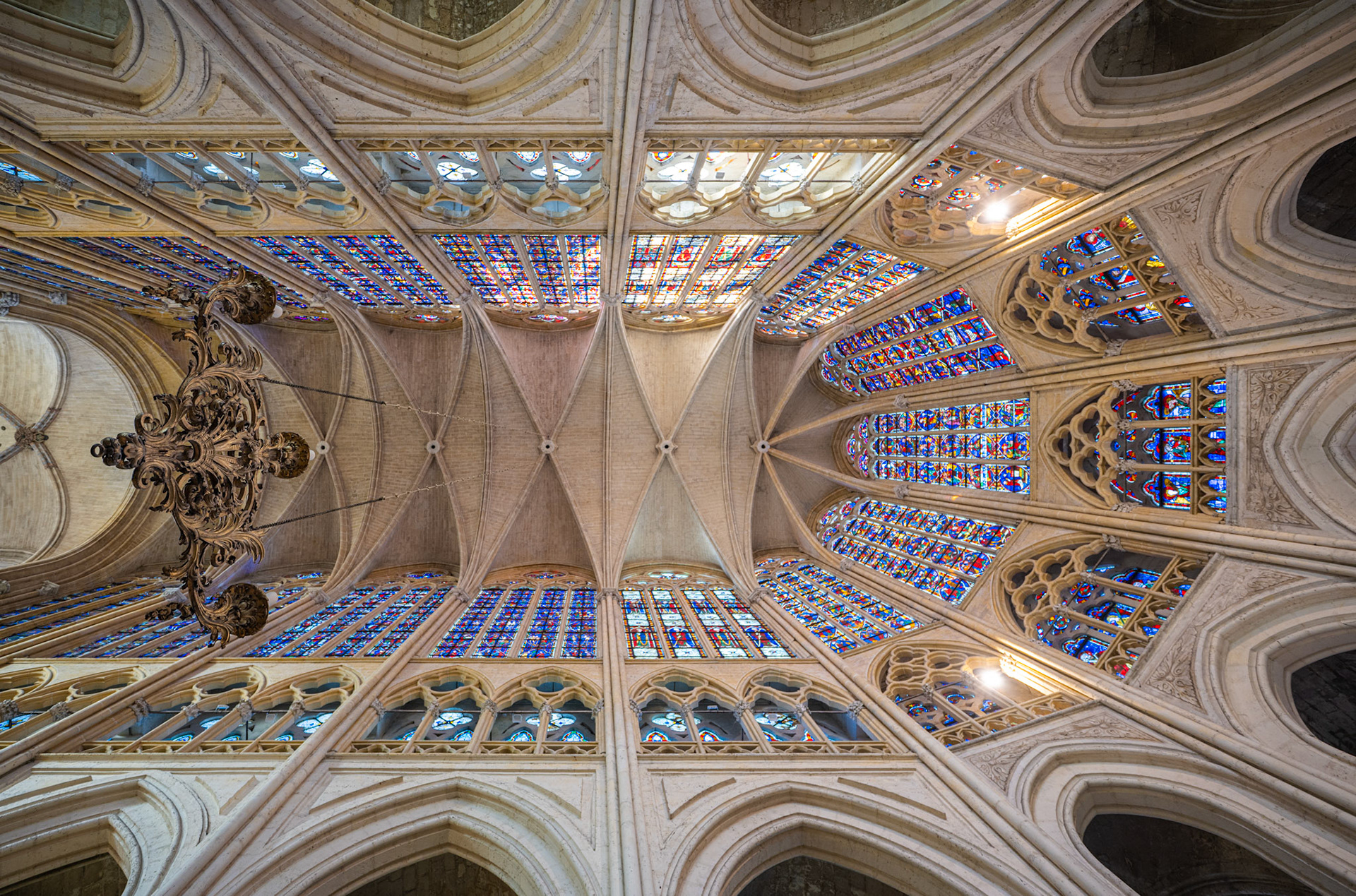
upper windows of the choir
The cathedral features three major rose windows: one in the west façade and one at each end of the transept. The earliest, in the north transept, was installed in the early 14th century. Its placement within an existing square opening created structural tension, requiring the addition of a central mullion and external flying buttresses to stabilise the wall.
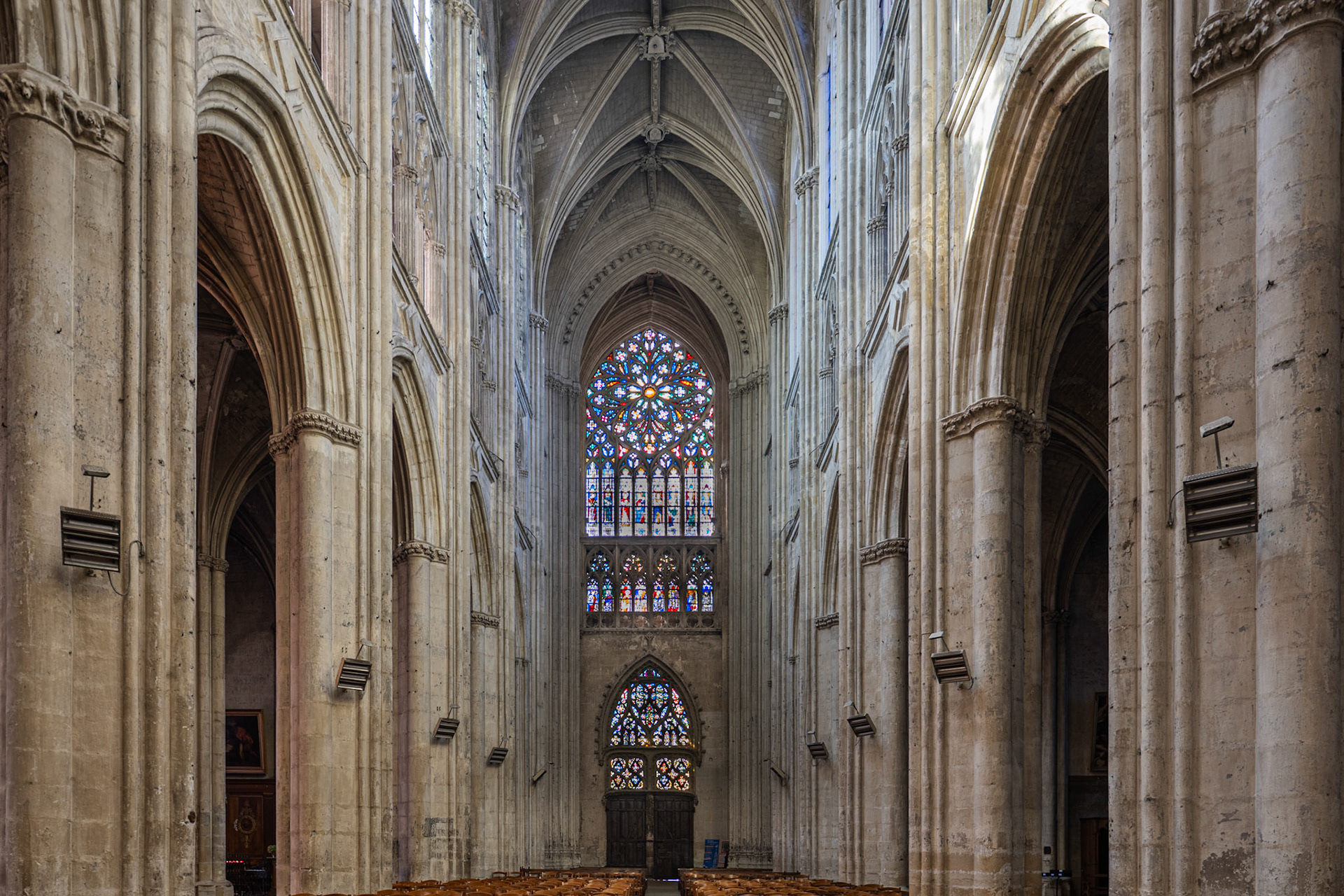
nave and west front rose window
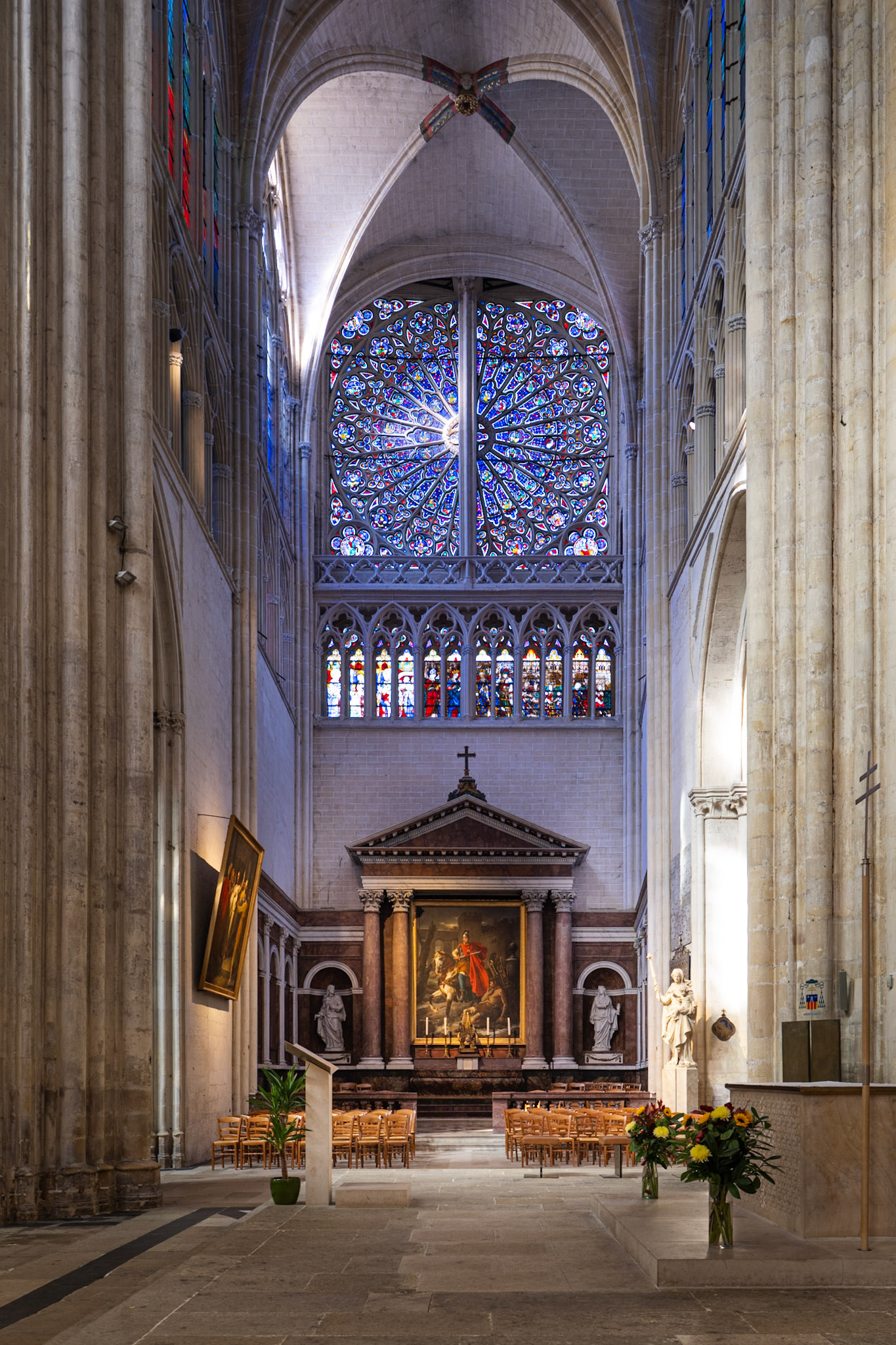
rose window of the north transept
You may also like