Château d’Ussé, overlooking the banks of the Indre near Rigny-Ussé, was originally a medieval stronghold and was rebuilt from the late 15th to the 17th century, blending Gothic, Renaissance, and classical elements in its towers, façades, and terraced gardens. Over the centuries, successive owners shaped its appearance, and the château eventually became the residence of the Blacas family, who have lived there for more than two hundred years - the only major Loire Valley château still inhabited by the same family for such a duration. Known as the inspiration for Charles Perrault’s Sleeping Beauty, the château opened to the public in 1975 and has retained a significant portion of its 18th-century furnishings.
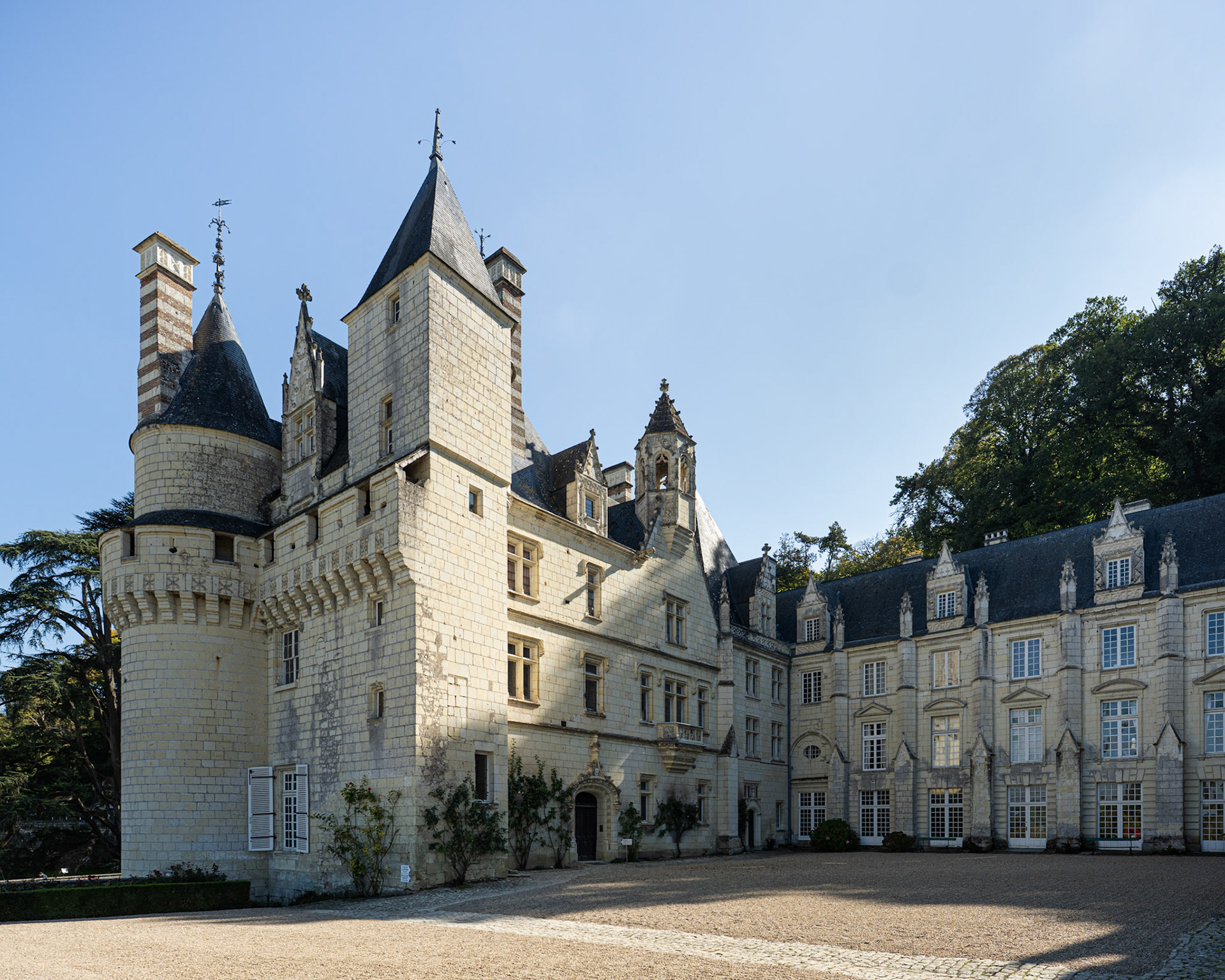
Château d’Ussé
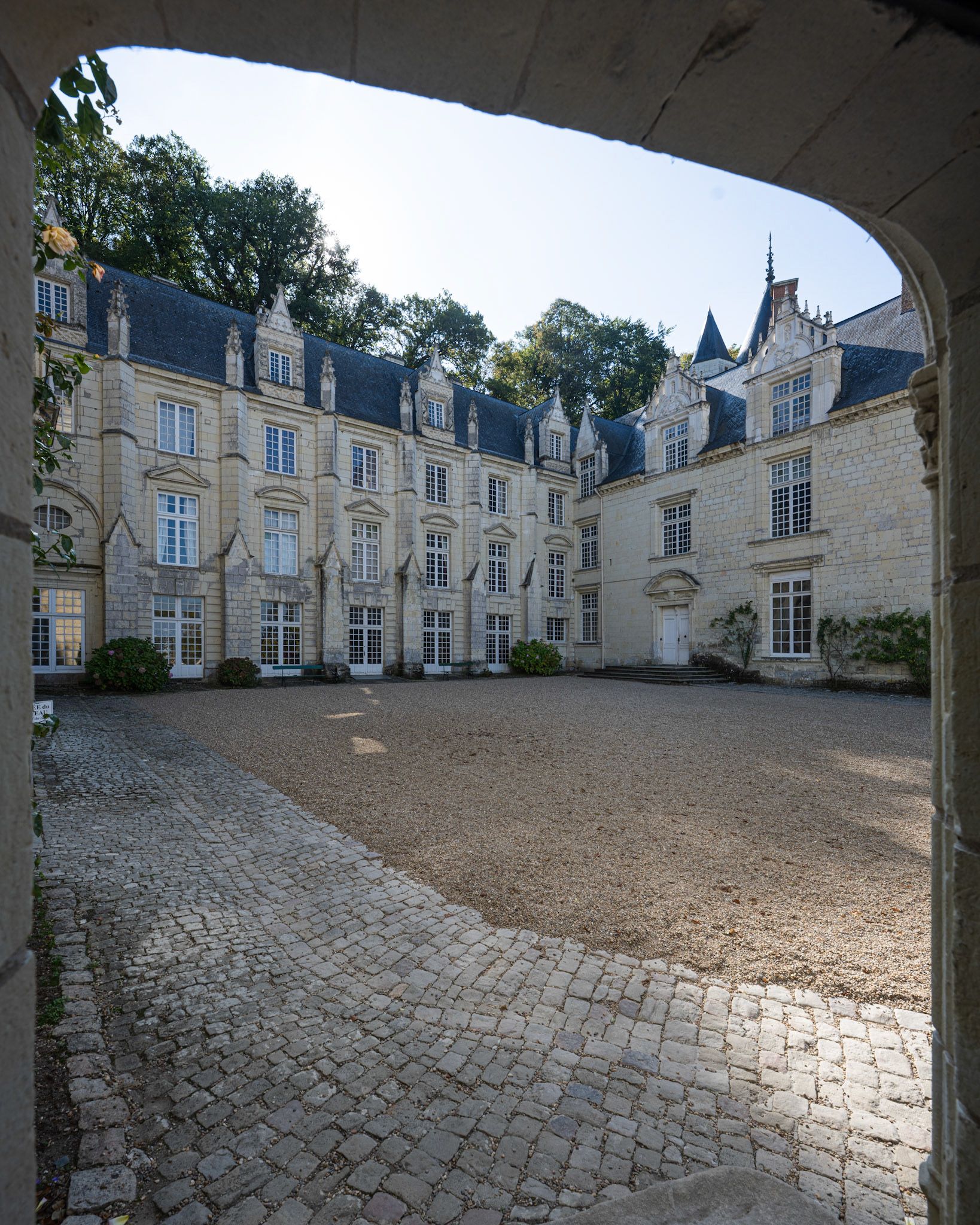
Château d’Ussé
The former guardroom occupies what was originally the château’s main entrance in the 15th century. Its most striking feature is the 17th-century trompe-l’œil ceiling, painted to imitate veined marble.
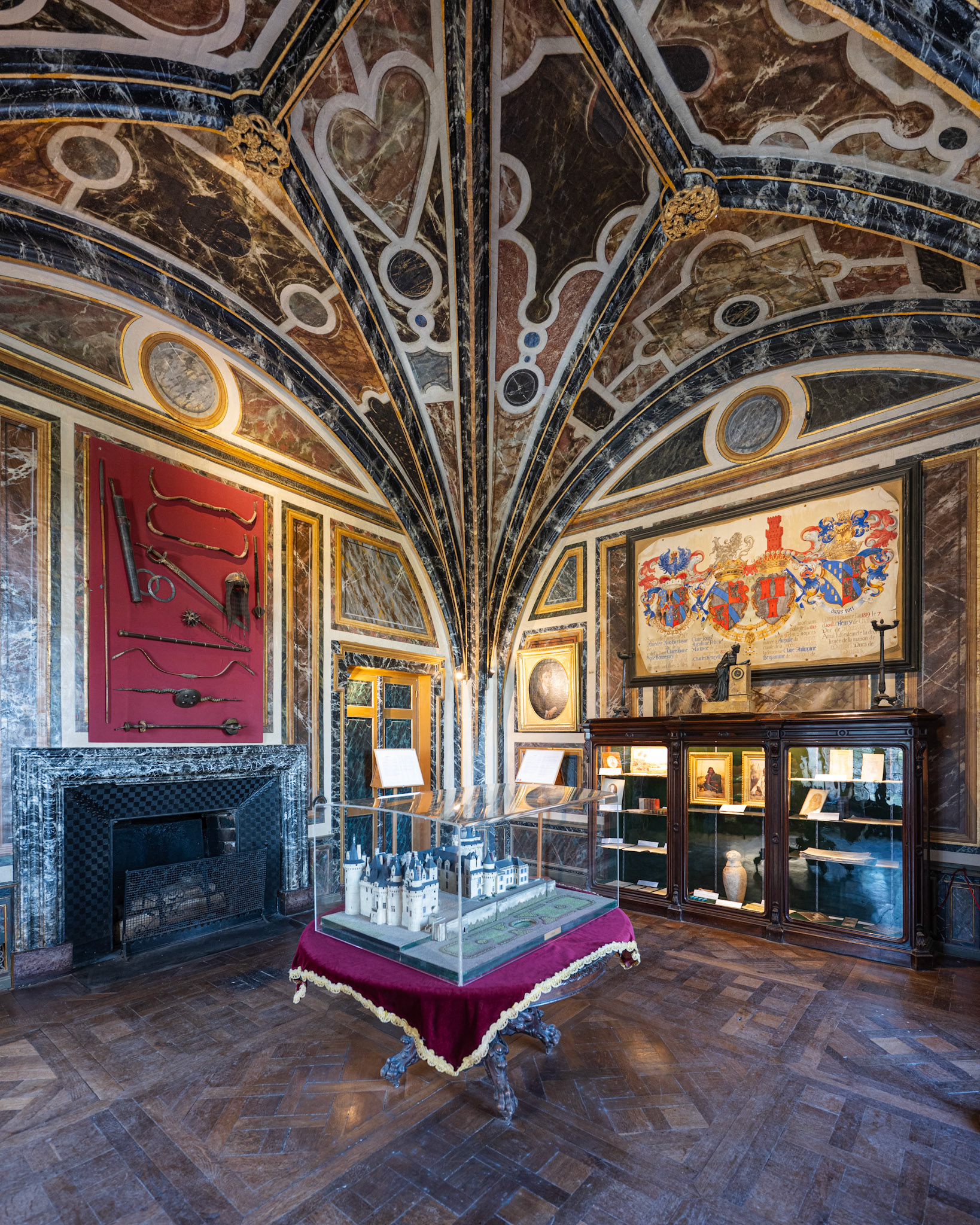
former guardroom with trompe-l’œil ceiling
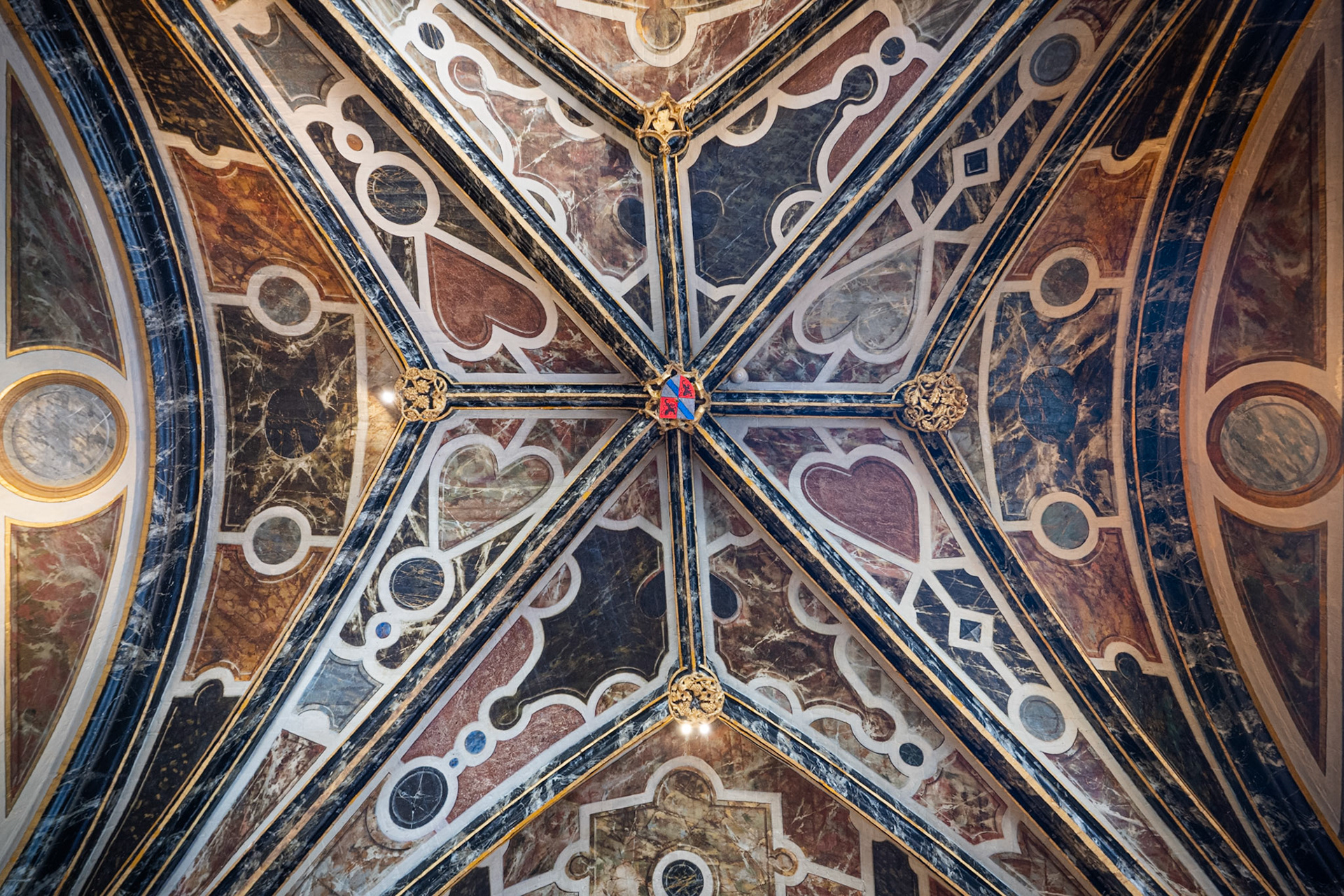
trompe-l’œil ceiling
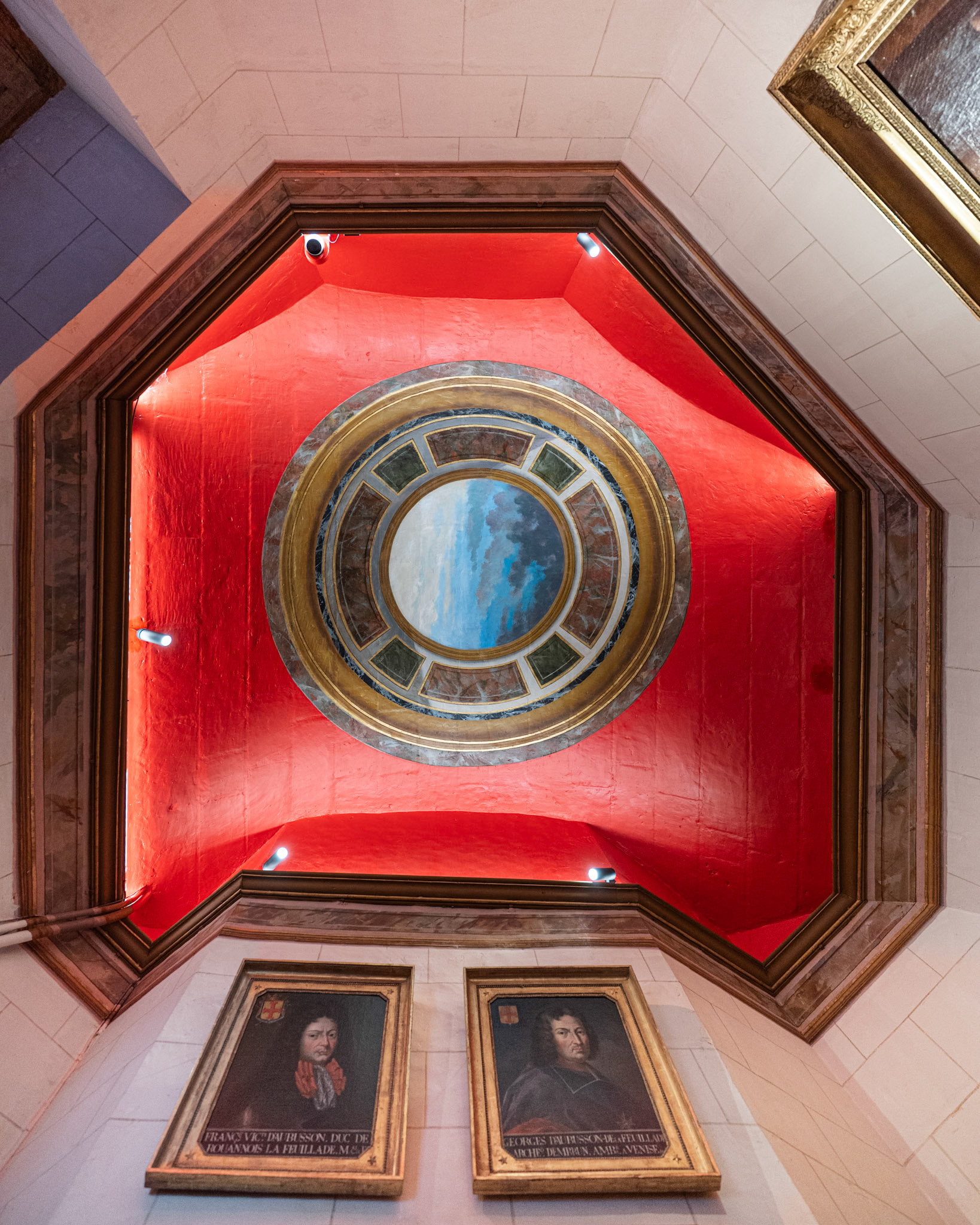
portraits and ceiling detail
The central gallery showcases daily life in Flanders through a series of 17th-century tapestries, woven after designs by David Teniers.
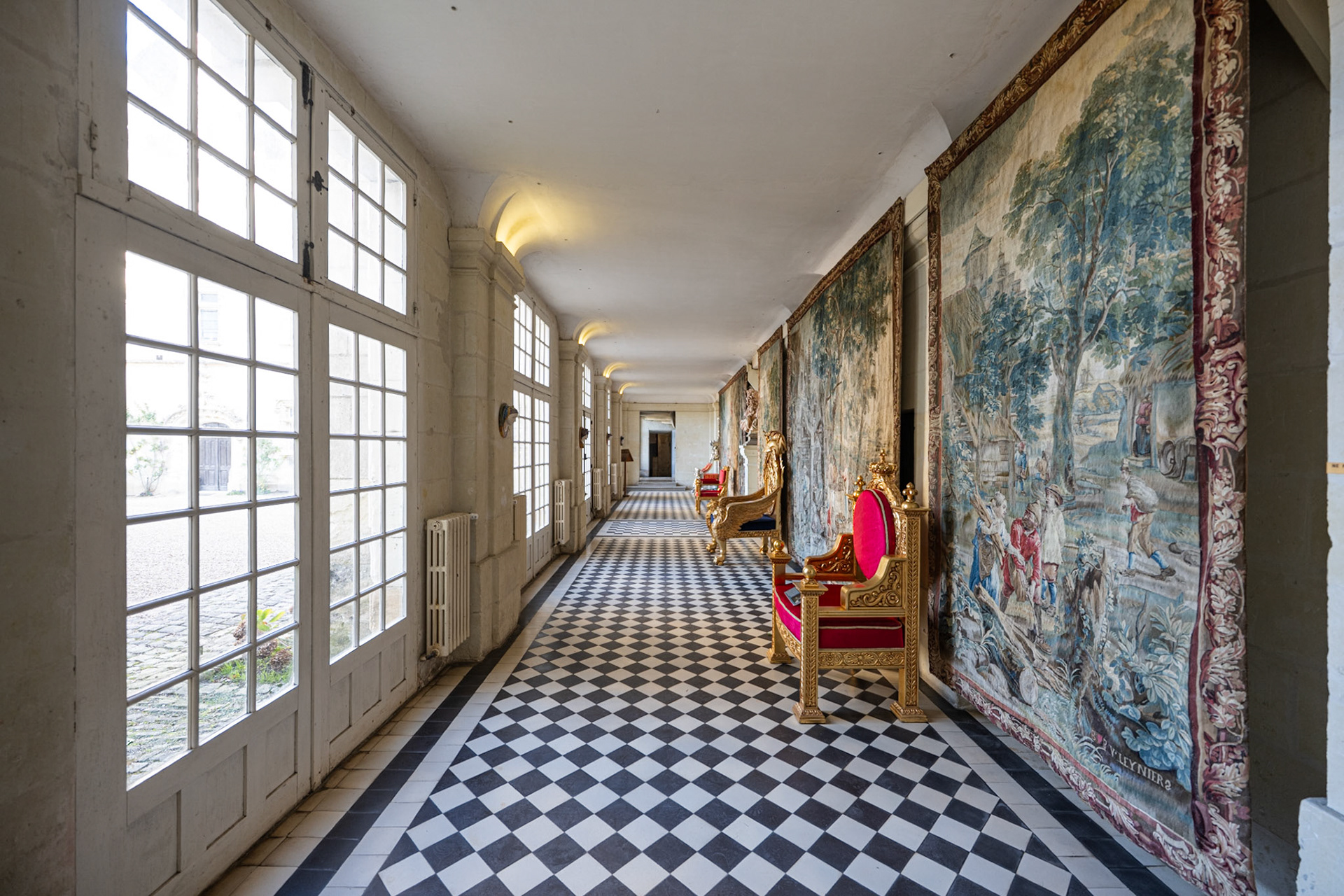
central gallery with tapestries
The dining room, decorated in the Louis XV style, preserves its 18th-century appearance and remains one of the château’s principal reception spaces. Renovated in 2005, it is still used for private dinners by the Blacas family. Above the fireplace hangs a portrait of Louis XV, a reminder of the period in which the room’s elegant decorative scheme first took shape.
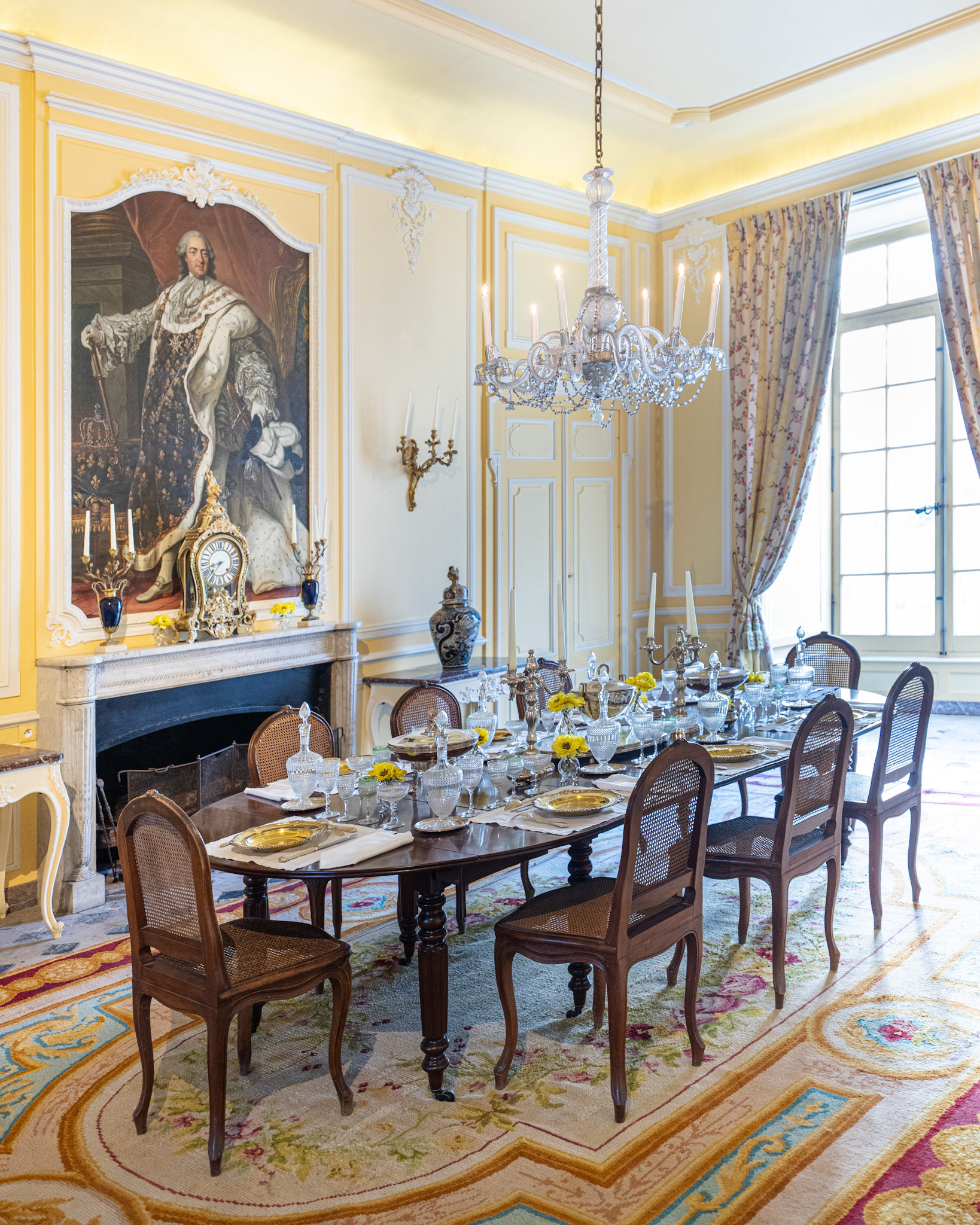
dining room
The château’s grand staircase, designed by French architect François Mansart, leads toward the King’s Chamber.
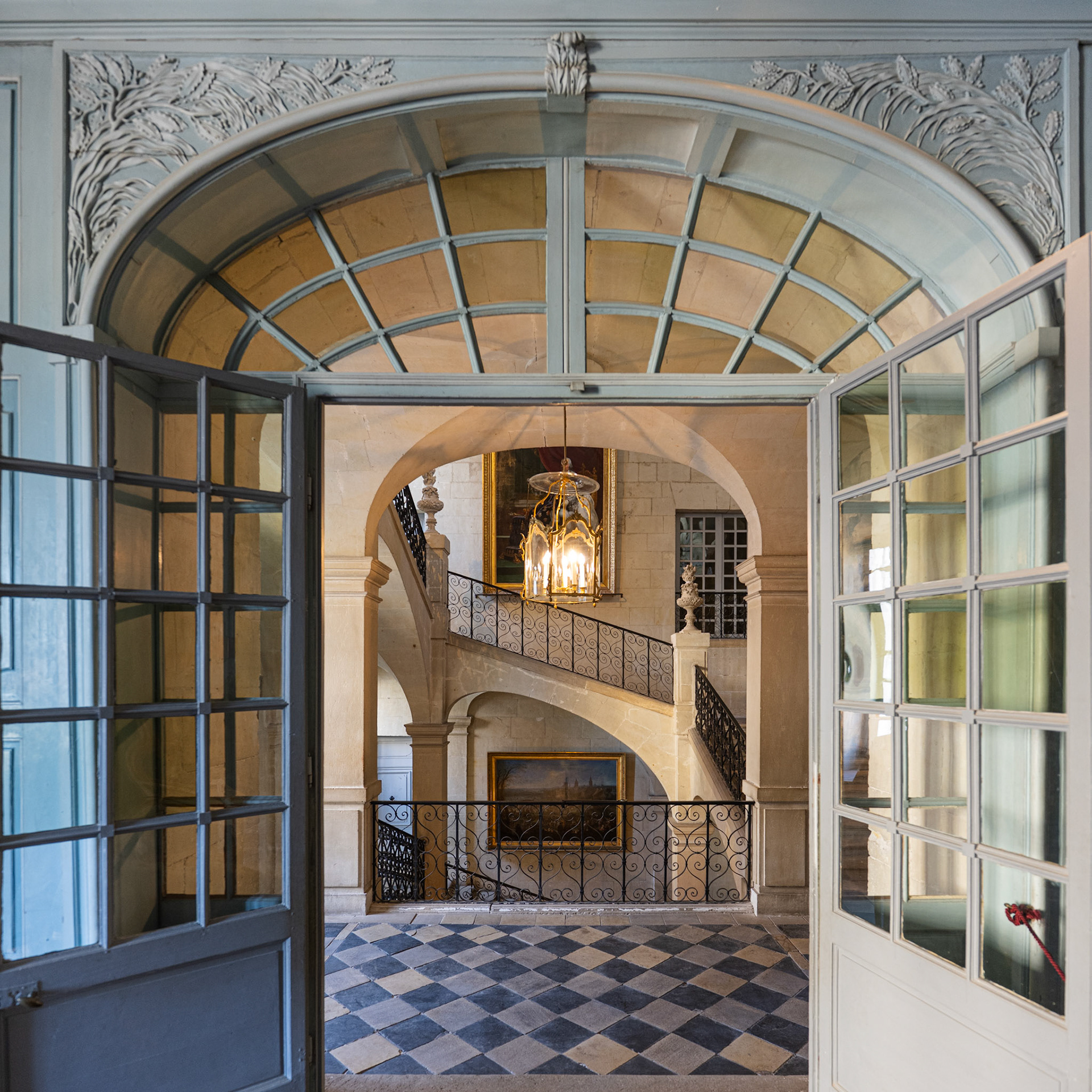
grand staircase
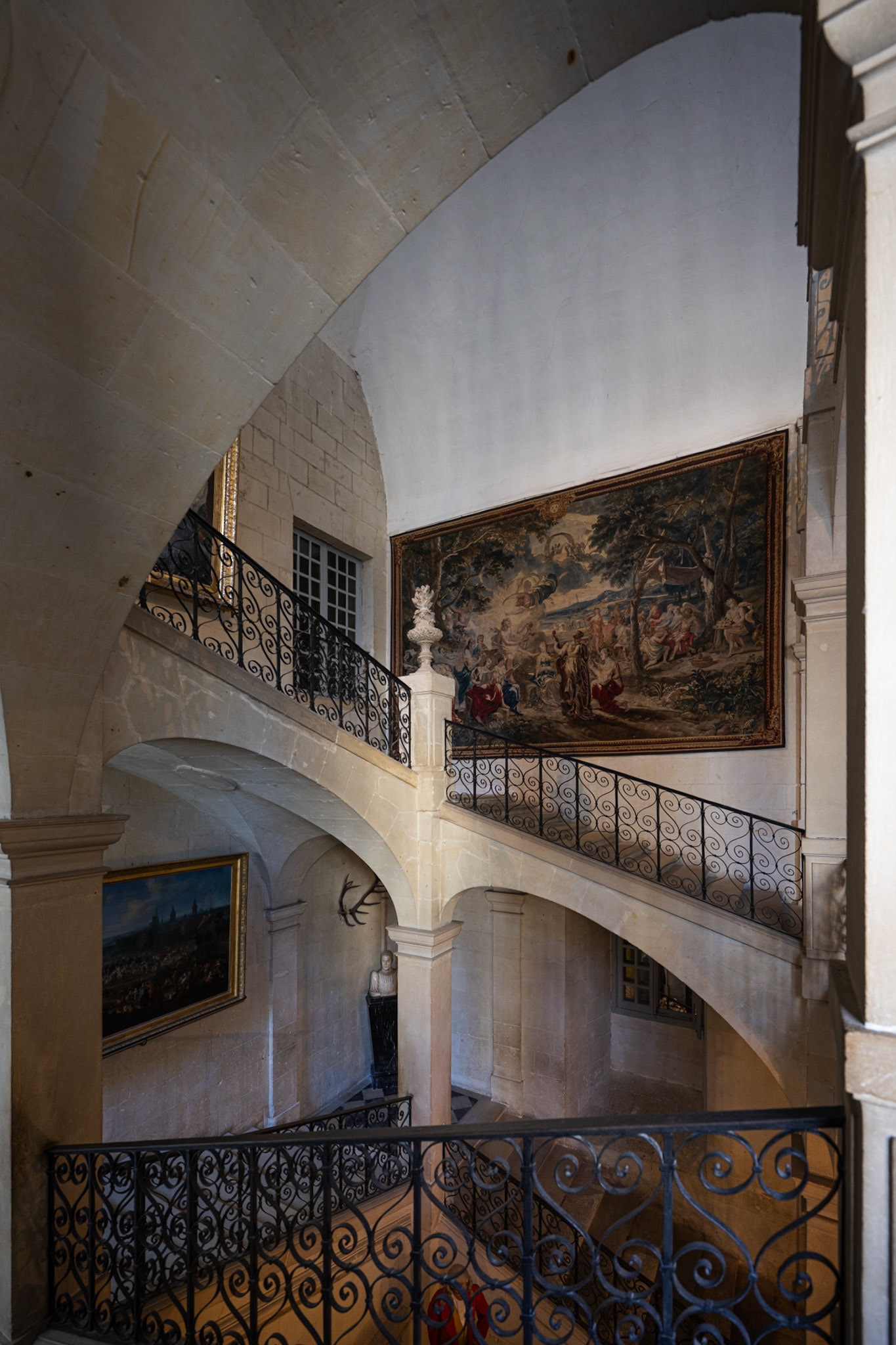
grand staircase
The antechamber, created during the 17th-century alterations carried out under Louis XIV, forms the first room of the suite traditionally reserved for the king’s use when travelling. This small space contains an elegant 18th-century desk in the Boulle style (named after the royal ébéniste André-Charles Boulle) and a notable copy of Veronese’s Wedding at Cana, the focal point of the room.
The King’s Chamber is one of the château’s most richly appointed rooms, distinguished by its 18th-century silk wall hangings woven in Tours with chinoiserie motifs fashionable at the time. Much of the furniture dates from around 1770, including a Louis-XVI–style Polish bed with its characteristic central canopy. The room also features commodes in the Régence and Louis-XV styles, as well as a remarkable collection of portraits. The room not only hosted Louis XIV, but much later also welcomed Haile Selassie, Emperor of Ethiopia.
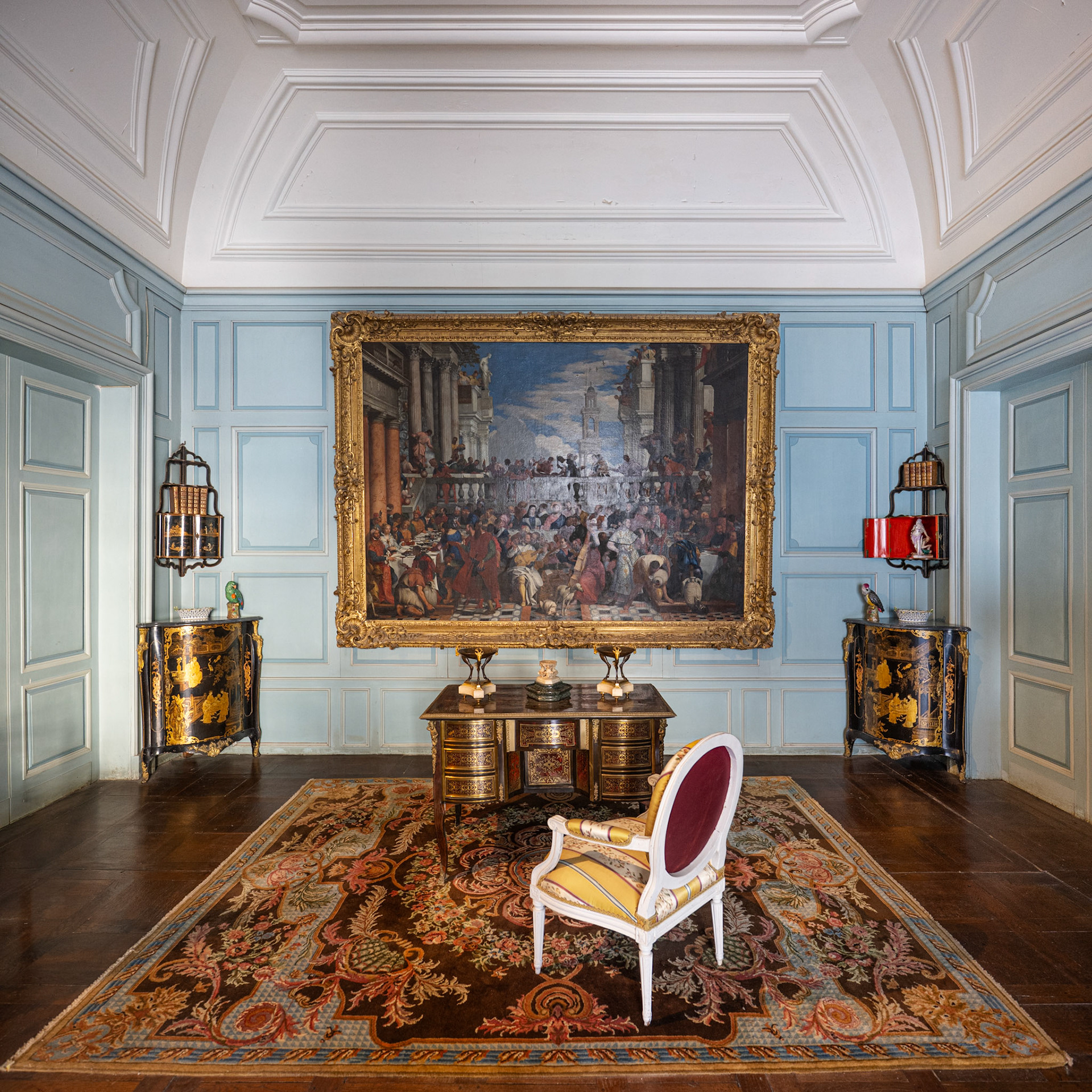
antechamber with a copy of Veronese’s Wedding at Cana
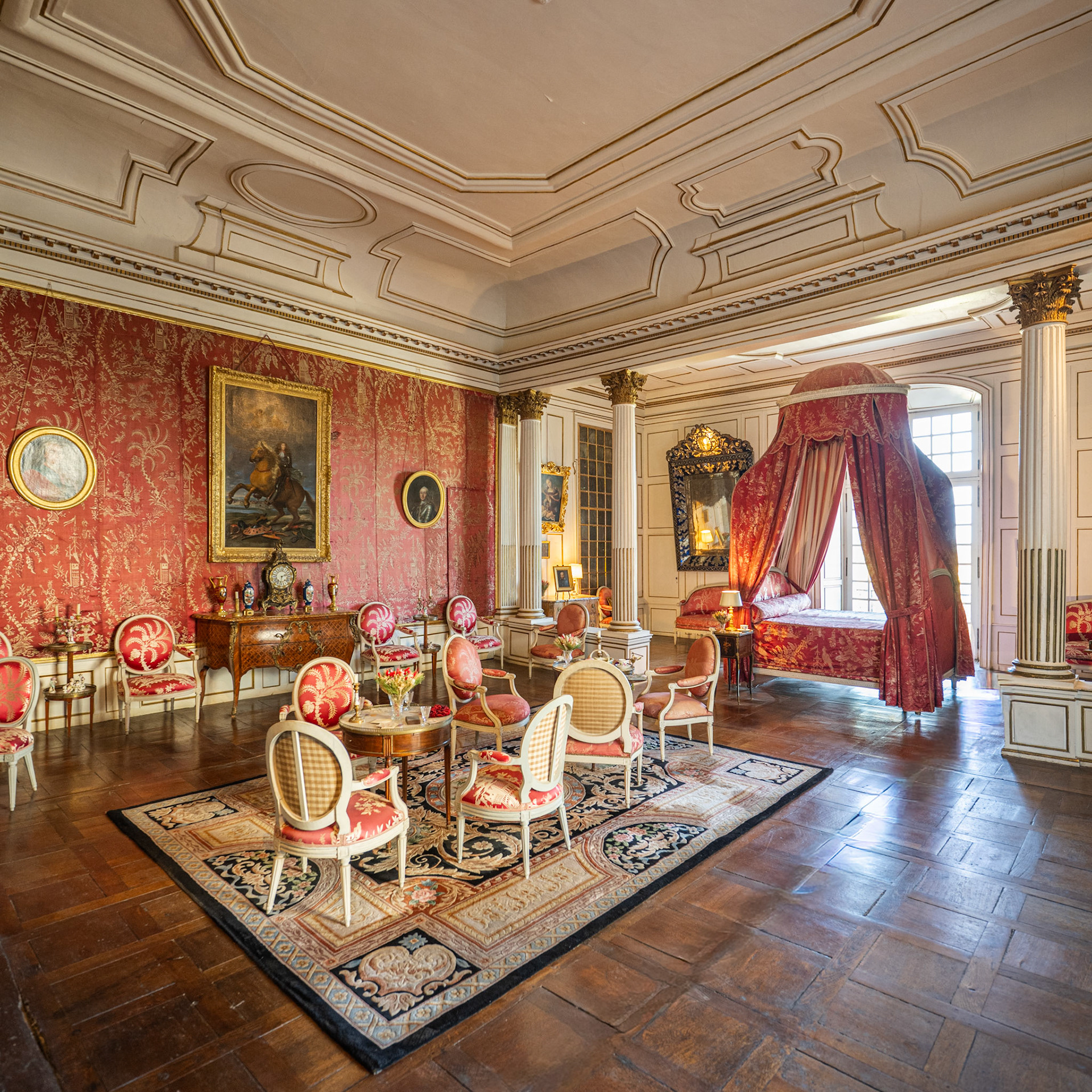
King’s Chamber
Chapel of Sainte-Anne
The Chapel of Sainte-Anne was built between 1521 and 1535. Dedicated to Saint Anne, the mother of the Virgin Mary, it displays an elegant façade where the intertwined initials “C” and “L” commemorate Charles d’Espinay and his wife Lucrèce de Pons, the principal builders of the chapel. Its architecture exemplifies the early French Renaissance, combining Italian influences, such as the entrance medallions and candelabra-style carvings, with French Gothic elements including pinnacles and ribbed vaulting.
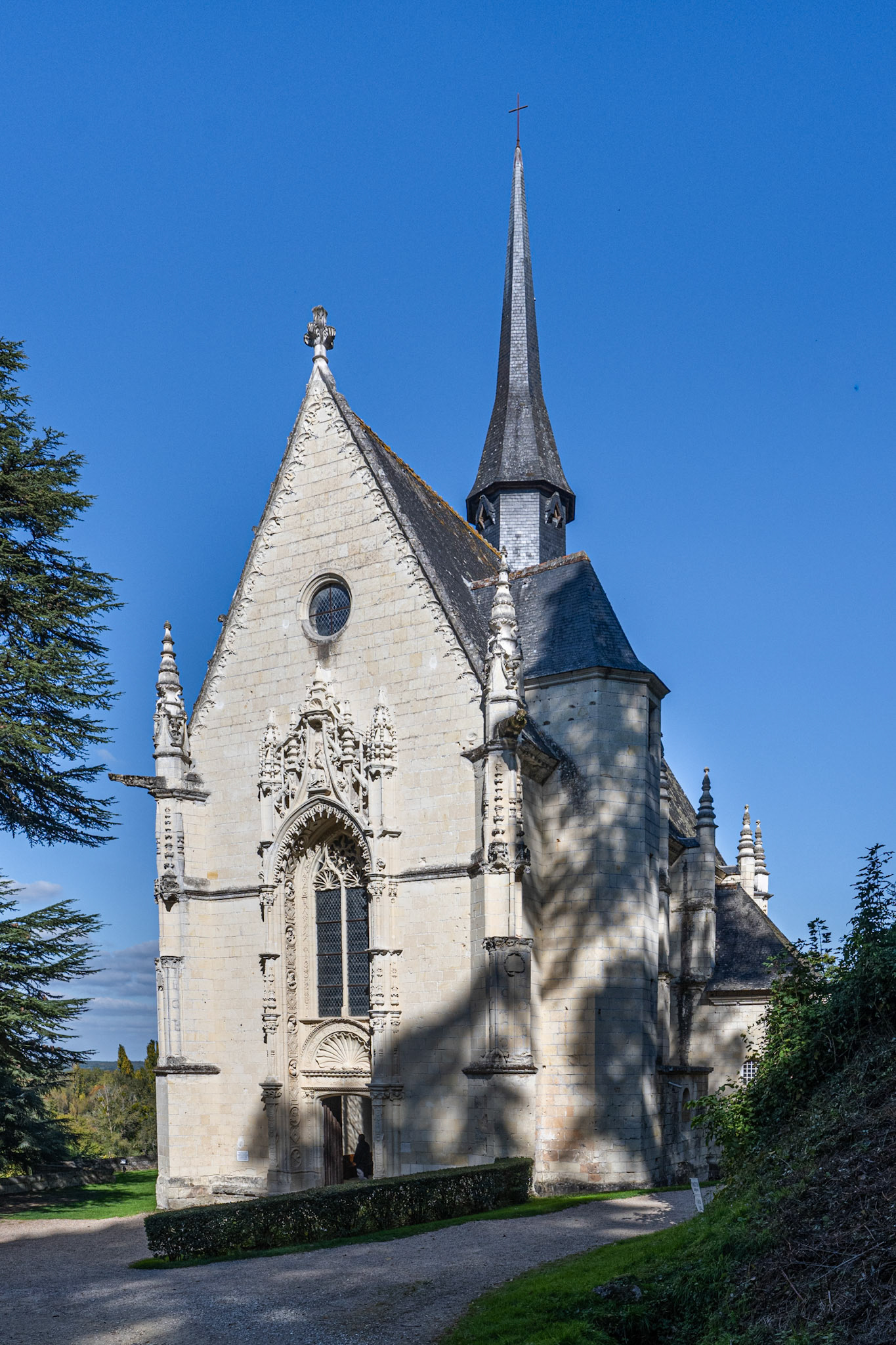
Chapel of Sainte-Anne - exterior
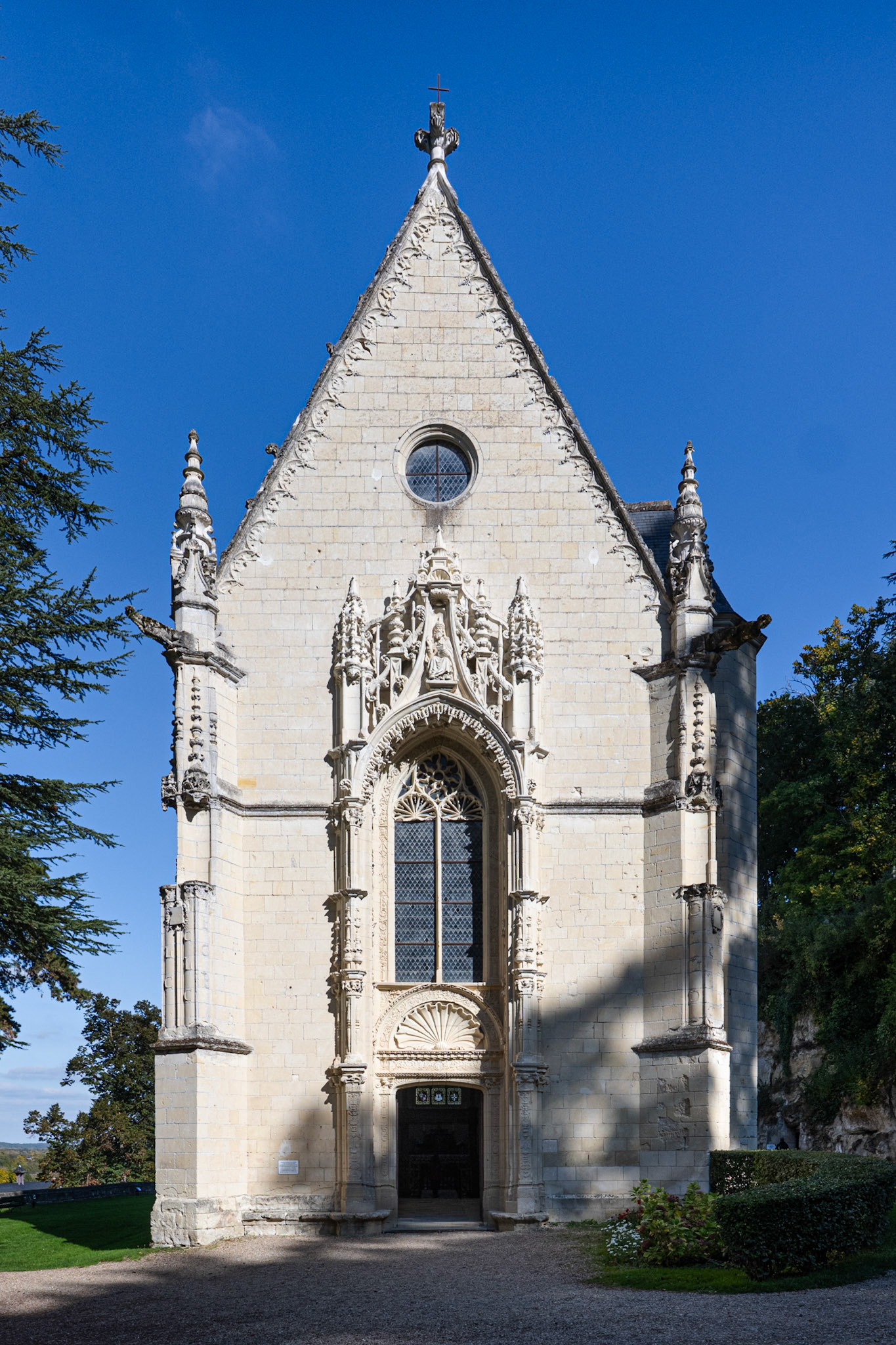
Chapel of Sainte-Anne - facade
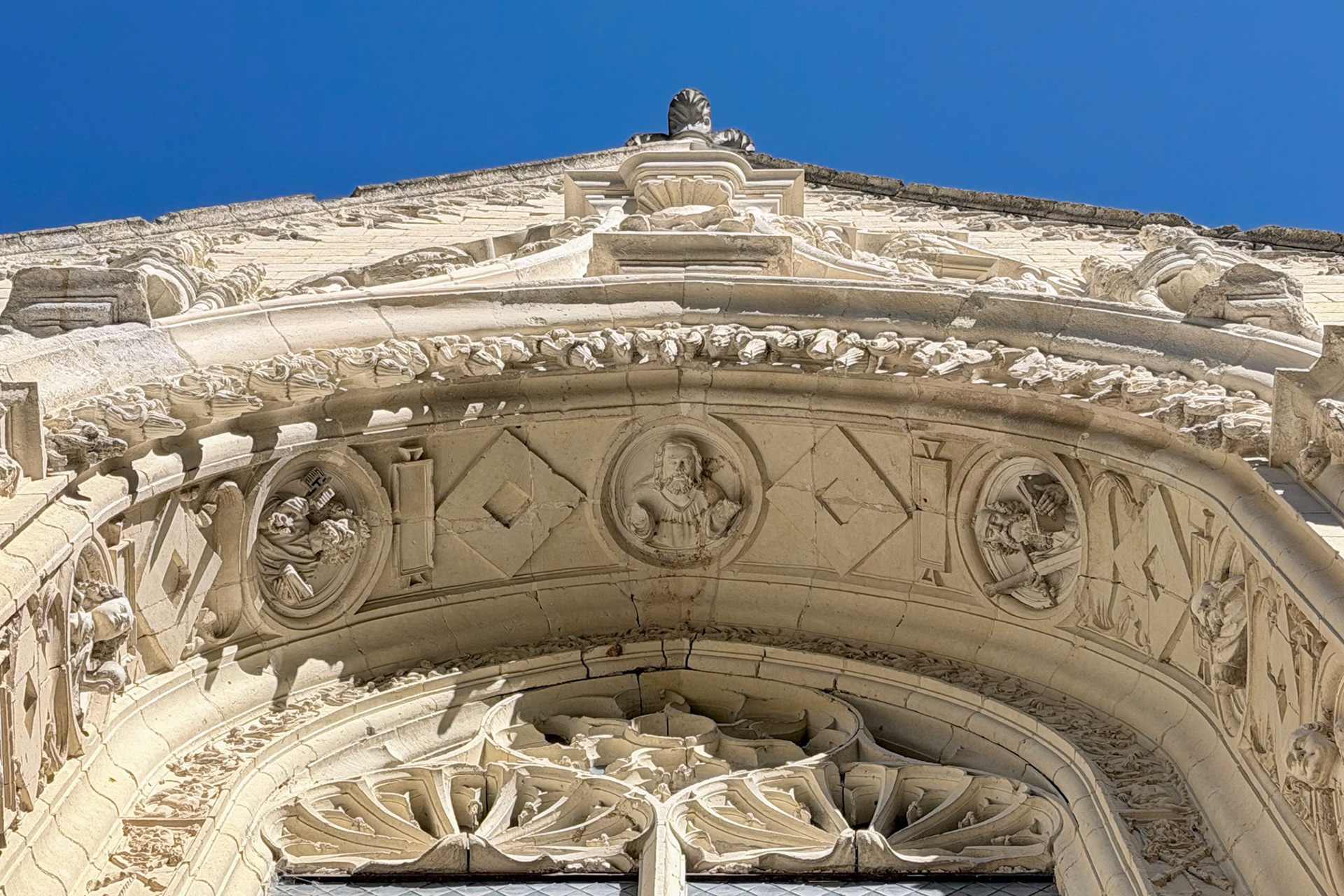
arch with medallions of the twelve apostles
Inside, the space is enhanced by carved wooden stalls attributed to Jean Goujon.
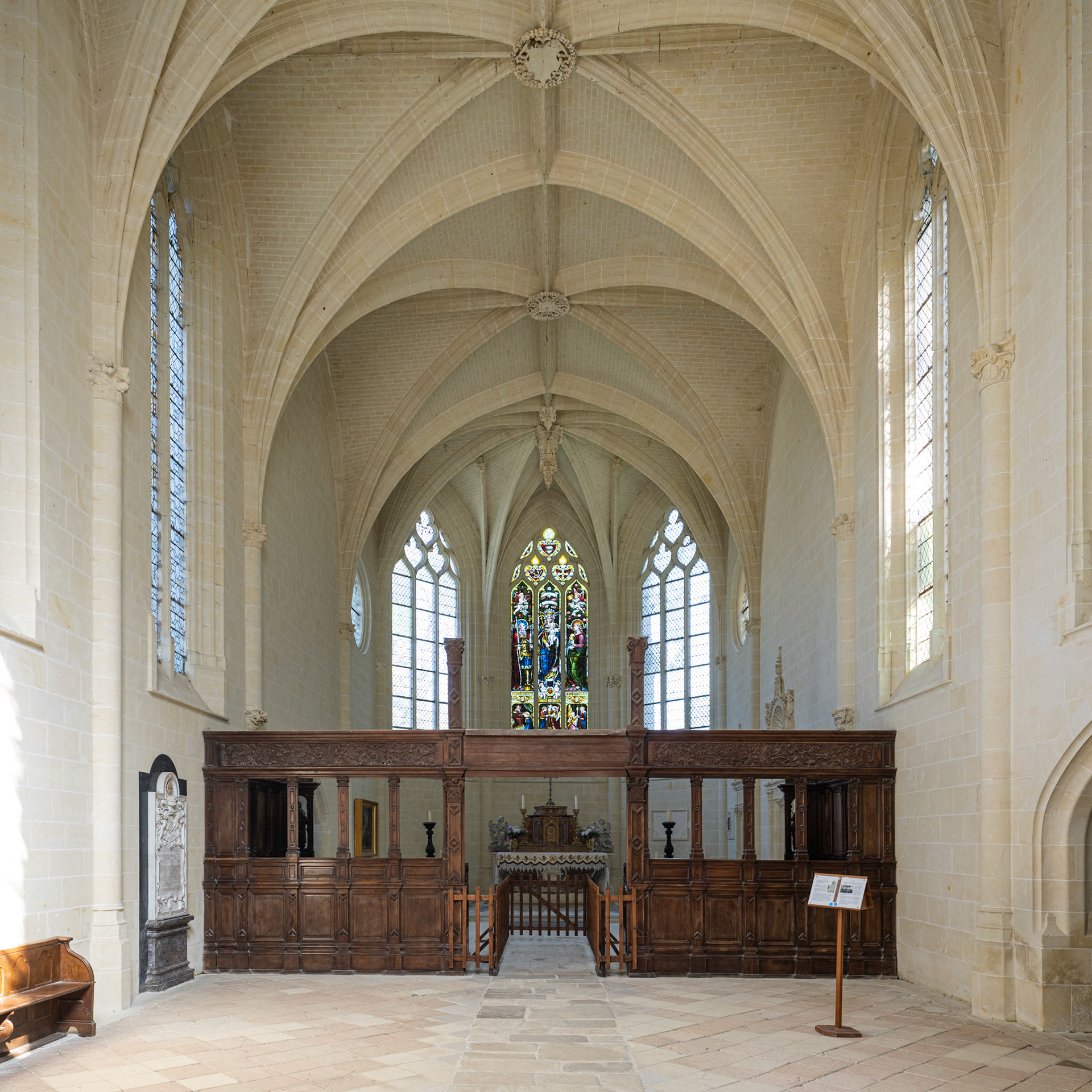
Chapel of Sainte-Anne - interior
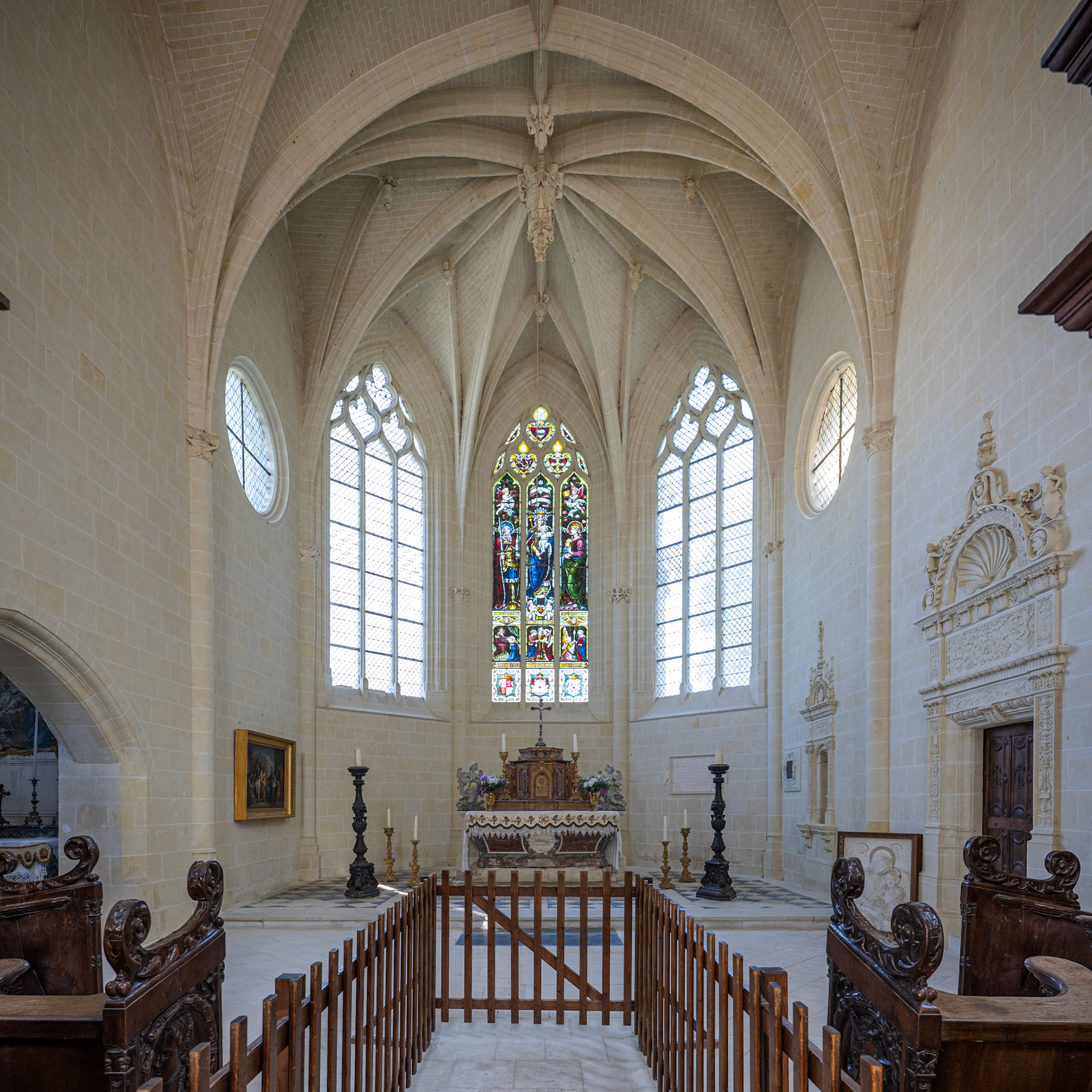
Chapel of Sainte-Anne - interior
You may also like